· TradeGym Editorial Team · Practice · 2 min read
Why Backtesting Is Not the Same as Trading Practice
A clean backtest can tell you what a rule did. Deliberate practice has to train what you do when the market is moving.
Backtesting is useful, but it answers a narrower question than many traders expect:
What would this rule have done on this historical data?
Practice asks a harder question:
What do I do when the next candle is not yet known and a decision has to be made?
The missing parts of a clean backtest
A backtest normally evaluates a rule against a prepared dataset. It can measure entries, exits, drawdowns, and other outcomes. It does not automatically train the surrounding decisions:
- which symbols deserve attention before the session;
- whether the setup still matches the original intent;
- how position size changes when risk is limited;
- whether an entry was late, early, or forced;
- what you noticed and ignored while the market was moving.
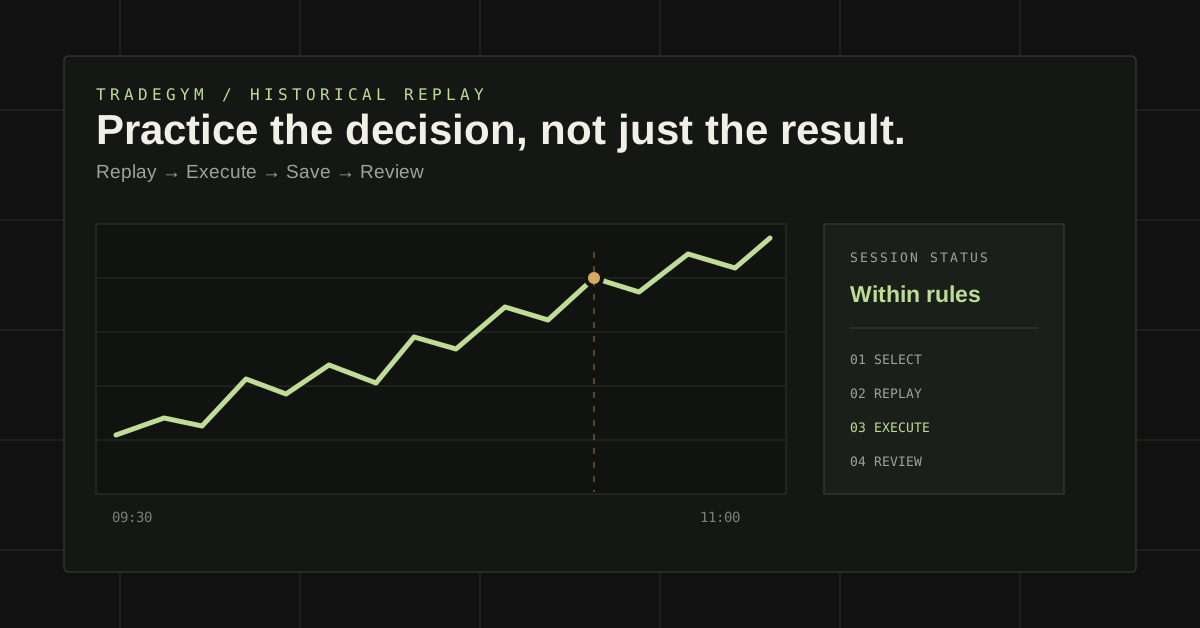
Those are execution and process problems. They need a replay environment where the future stays hidden until the session reaches it.
A useful practice rep
A stronger rep has five parts:
- Choose a historical session and write down what you intend to practise.
- Replay the market from a known starting point.
- Make simulated decisions under a defined risk constraint.
- Save the trades together with their context.
- Review the process and choose one adjustment for the next rep.
The point is not to manufacture pressure or celebrate a profitable outcome. The point is to make the decision observable enough to improve.
What to review afterwards
Start with process evidence:
- Did the trade match the declared setup?
- Was the risk acceptable before the order was sent?
- Did the decision change because of new information, or because of urgency?
- Was the exit planned, managed, or improvised?
Only after those questions should the result be considered. A profitable rule break is still a rule break, and a losing trade can still be a sound practice rep.
That is the difference between replaying data and practising a craft.